Abstract
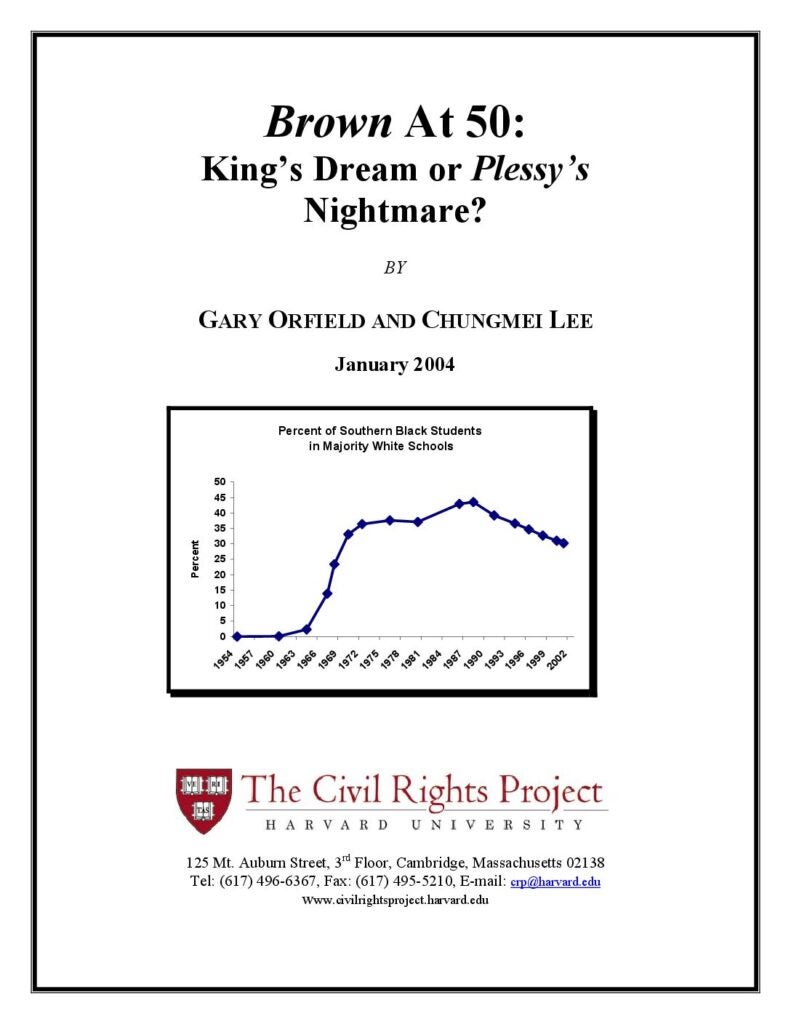
This report examines a decade of resegregation from the time of the Supreme Court’s 1991 Dowell decision, which authorized a return to neighborhood schools even if that would create segregation, through the 2001-02 school year. It goes beyond previous reports by Harvard’s Civil Rights Project to study the impact of resegregation in districts where court orders were ended, and includes new data on the situation of the four communities involved in the 1954 Brown decision as well as of a number of districts whose subsequent cases produced decisive changes in the law of school desegregation. It also considers the very different desegregation levels in communities of differing sizes. Finally, it reviews the broad sweep of segregation changes nationally, regionally, and by state since the 1954 decision. It shows that the movement that began with the Supreme Court decision has had an enduring impact, but that we are experiencing the largest backward movement in the South, where the court decisions and civil rights laws had produced the most integrated schools in the nation for three decades. Contained in the appendix are 13 color enhanced tables presenting trend data (contains 22 tables and 81 endnotes.)
See the original press release disseminated on January 18, 2004 or find it attached here.
This item is also available on eScholarship at: escholarship.org/uc/item/1497f5sg